This article appeared in the 2019 Issue Three of Specialist Printing Worldwide.
In March 2019 Bruce Ridge spoke to Raymont, Director of Sales at Electronic Instrumentation and Technology (EIT) in Leesburg, Virginia USA. This is the latest in a series of articles intended to provide insight to the future of our industry from the perspective of members of Academy of Screen and Digital Printing Technologies.
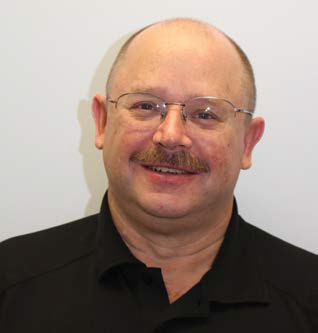
Jim Raymont, Director of Sales at Electronic Instrumentation and Technology
BR: Prior to working at EIT you were a high school science teacher. How did the move to your current job come about?
JR: I was a high school science teacher for six years after receiving a degree in science education from Ohio State. I was certified in all areas of science including biology, earth science, chemistry and physics. I spent two years at the middle school level and four years at the high school level; teaching both honor classes and students struggling (i.e. Vinnie Barbarino and the sweat hogs) to get their one science credit needed to graduate. I also coached swimming and when an opportunity to sell (legal) pharmaceuticals came up I moved on.
BR: Was it easy to get the sales job with experience as a teacher?
JR: It was very competitive, but my science background and experience in communicating with students and people allowed me to get the job. I received a lot of product (anti-arrhythmic, antihistamine and oral contraceptive) and sales training in that job. It was very interesting but also very frustrating. You would promote your product to doctors, but you never knew which doctors prescribed your particular products. Sales reports at that time were specific only to the postal (zip) code and not the specific doctor.
BR: So how did this get you into the business of measuring UV energy?
JR: I did not go directly from pharmaceutical sales to UV sales. I sold pharmaceuticals for three years and after particularly rough, snowy, cold winter in Ohio, combined with an early mid-life crisis, I moved to Florida to work in the scuba industry. I have always loved scuba diving. I had taught scuba diving in Ohio and moved to Florida to teach it. In addition to teaching, I also managed a dive store in south Florida; first in their Miami location and then in Key Largo.
Things changed in August of 1992 when Hurricane Andrew hit Homestead and destroyed the house. Once rebuilt, I moved to Virginia, not to sell UV instruments but to sell scuba diving computers which EIT manufactured at the time. EIT exited the scuba business a few years after I arrived to concentrate on our growing contract electronic manufacturing services (EMS) and UV instrument products. I stayed with EIT to learn and to focus on EIT's UV measurement products. Over the last 26 years at EIT, I have also helped out with our EMS business but prefer the daily variety of the UV curing business.
BR: Do you still scuba dive?
JR: Yes, I dive as much as I can living in Virginia. All told, I have done over 3,000 dives over 44 years and certified close to 500 people. I continue to dive around the world as a 'tourist' with an underwater camera as often as I can. People ask, "where is the best place to dive?" I usually respond that the next trip will be my favorite. I have been to the Philippines three times and it is probably my favorite spot. It has wonderful people and both small and big critters. I hope to get back in the next year or two.
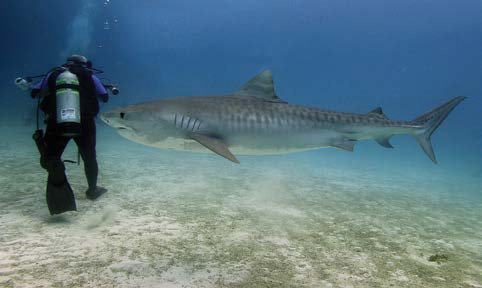
Diving enthusiast Jim originally worked for EIT selling scuba diving computers, which the company manufactured at the time.
BR: I have snorkeled, but never scuba dived - why should I make a point to go scuba diving?
JR: Snorkeling, especially in warm clear water is a great way to see the ocean. Some animal encounters such as swimming with whale sharks are best done while snorkeling. With scuba diving, you have a tank of air and can spend more time interacting with animals.
I have been able to go back in history to see sunken ships and have sat in the cockpit of a Japanese Zero airplane at 60 feet below the surface. My preference at this point is diving in 80-degree water with 80 feet of visibility.
I usually dive with an underwater camera and with a scuba tank you can stay down for an hour or more which is really important if you want to see and photograph wildlife. If you move slowly, the wildlife swims around as if you were not there.
BR: How did you make the transition from scuba expert to UV measurement expert?
JR: I came to EIT in 1993 for the scuba computers. As mentioned earlier, we decided to concentrate on our core business a few years later and my UV training began. It has been an ongoing learning process ever since. Rarely does a week go by where I do not learn something new. One of the best things that I like about what I do is the variety of end use applications. I can talk to a medical manufacturer in the morning, a wood manufacturer in the afternoon, and then one of many different types of print manufacturers at the end of the day. I am living in that TV show, 'How it is Made' and I get to see how UV is being used daily.
BR: How did the EIT Company start in business?
JR: Joe May, EIT founder and CTO started the company in 1977. He is an Electrical Engineer that designed some products as a consultant. He was asked to manufacture his designs and eventually said yes, starting the EIT business on his kitchen table. EIT got involved with UV measurement in the mid-80s when we received printed circuit boards that were not fully cured. Joe holds 28+ patents in areas ranging from the measurement of gasoline octane rating to measurement of ultraviolet energy used in industrial applications. He is a real inspirational leader.
BR: EIT has an unusual work schedule of a 9-day/80-hour schedule where they are closed on alternate Fridays. How did this come about and how does it work?
JR: The 9 X 80 schedule is used by more and more companies and government contractors in the northern Virginia area. We work the same 80 hours every two weeks but do it in nine days versus the usual 10. EIT first tested it as a summer schedule and have been doing this for over two years now. It has worked well. In a two-week cycle, we work four 9-hour days and one 8-hour day in the first week. We work four 9-hour days in week two and get every other Friday off. Coming in at 6 or 6
24/7. For the most part, our customers have adjusted, and we see more companies in our area also working this type of schedule.
BR: Is there something beyond LED when it comes to UV curing of coatings?
JR: Beyond LEDs? We are still in the process of transitioning to LEDs. Adoption of UV LEDs has come a long way in a short period of time. Some UV applications have rapidly switched over while others are testing and experimenting with LEDs. We have seen the LED irradiance increase and prices become more competitive to traditional UV sources. I was just at a wood show in Europe; instead of using 18 mercury-based sources on a wood line, the customer installed seven LED sources and four mercury lamps.
UV LEDs, especially with digital printers have exposed (pun intended) a whole new group of printers to UV. In many cases, I find myself going back and starting the UV education process from square one. UV LEDs are stable, but you still need to be able to control the UV and other variables in the print process.
For anyone looking to switch or purchase an UV LED, educate yourself. Know how the UV LED system works and make sure the coatings or ink that you select will work with your LED. Not all UV LEDs are created equal. There can be differences in the Irradiance (W/cm²), Energy Density (J/cm²), Centre Wave Length (CWL), uniformity of the array, cooling and support you will receive from a supplier. Does your LED source supplier understand UV chemistry? It is best to do your homework as it is a buyer beware situation.
Coatings have improved and we need the development of coatings to continue, especially in applications where surface cure which is a function of shortwave UV is important.
There is a tremendous amount of R&D and investment being spent on developing short wavelength LEDs in the 270-280nm range. Disinfection and the treatment of water and air are the main drivers for the investment and UV curing applications will benefit from this technology. Shortwave (UVC) LED systems are improving in power, lifetime of the chips and cost. We are still a few years from commercial and economic viability with UVC LED arrays for curing. Many companies are testing UVC LED prototypes that are being produced by source manufacturers. I look forward to watching the LED progress.
Beyond LEDs we have heard of some companies using UV excimers that have an output in the 172nm region. There may be some advantages with food packaging applications as the use of photoinitiators is reduced or eliminated.
BR: Do you attend other printing related shows other than SGIA (now Printing United)?
JR: We usually rely on one of our distributors to work with us at print shows. We have done FESPA and that was a good show for us. We plan to attend the InPrint show in November. The work we did this week at Nazdar will help with the high-speed ink jet equipment in the market. Ink jet equipment using LEDs is moving faster and we need to come up with ways to measure and monitor the energy used to cure the inks on fast moving systems.
BR: We have worked together on seminar panels at previous SGIA shows and you do a great job at communicating complicated technical information in an easy to understand language. Is this something you learned from teaching in high school?
JR: Probably so. It is easy to see on someone's face when they are not understanding what you are telling them. This is particularly obvious with the education of UV since you are talking about something we cannot see. It is very abstract. I often rely on everyday life analogies that can related to the way UV energy works and is measured.
BR: What are some of the more interesting printing applications you have seen in your travels?
JR: I was just in Asia in August this past year, and there were people printing with UV coatings on cell phones and cameras with very high-tech equipment, but they didn't really understand what they were doing. There were no procedures in place. They went from broadband mercury curing to LED curing without knowing anything about how it is done.
The advent of the way inkjet has taken over the SGIA show and UV technology is the key driver to the growth of this technology change. That is exciting for us at EIT.
BR: You travel all around the world for EIT. What are the benefits of doing international travel?
JR: Well first off, I get to see a lot of places and meet a lot of people which I still very much enjoy. I wish I had paid better attention in school in history class. I like to think I have friends all over the world. Anyone that has travelled extensively for business knows that while you may see a lot of places; the list of places that you want to go back to and really see on a non-business trip keeps getting longer.
I spend a lot of time when travelling working with and educating our distributor network on our products and keeping them focused on providing the best information to their customers. Professionally, I get to create solutions for various applications with different cultures. I find this very gratifying.
BR: Has being a member of the Academy been beneficial for you?
JR: I truly enjoy the company and expertise of the Academy members. I am UV focused and not necessarily a printing expert per se like so many of the members. It has been really great to be associated with the printing experts of all disciplines.
BR: What do you think about trade shows today? Have your expectations changed at trade shows?
JR: Yes, my expectations have changed. My mother told me to sell something small that provides a high value. We can show EIT products in a small booth and at trade shows are committed to not only trying to find new customers but to also focus on servicing our existing customers. I learned a lot about sales with the pharmaceutical company. There was an emphasis on making the most out of the available time slot as doctors were always on a short time frame
and wanted you to get to the point without a lot of extra information. This has helped me throughout my EIT career, especially at trade shows.
BR: Where are your favorite places to go to find new information on the industry?
JR: I am involved with RadTech, a trade association to promote UV& EB technology. I read trade magazines and I also try to pay attention to industry websites. EIT needs to stay ahead of industry measurement needs so I am always looking for applications that EIT can participate in with either our existing or new products.
BR: It is always great to work with you, and it is even better to talk with you while drinking beer...
JR: If you love beer, this is a great time to be alive. There is great beer everywhere you go - I love hoppy, west coast style IPAs that have a little citrus flavor in them. There have been many UV problems solved or product ideas hatched over an after-work beer. The only thing better than an Academy dinner would be an Academy dinner with the option to have beer instead of just wine. Bruce, that should be our goal for the next dinner!
The Academy of Screen and Digital Printing Technologies (ASDPT) is composed of professionals that have dedicated a large part of their career to the education, development and innovation to the industry. This interview was conducted by Bruce Ridge, Director of Technical Service, Nazdar Ink Technologies. Bruce has been a member of the Academy of Screen and Digital Technologies since 2004.