The introduction of Inkjet printing into the textile garment market in DTG (Direct to Garment) printing brings along the benefit for DTG printers to implement the G7 methodology of color control into their process.
G7 methodology has become a world-wide accepted color control method for the printing processes that use substrates that are outside of the standardized CRPC - Characterized Reference Printing Conditions. The CRPCs are all based on commercial offset lithography printing on paper substrates. The CRPCs still dominate the defaults in prepress software when defining the color space for images printed with any CMYK printing device.

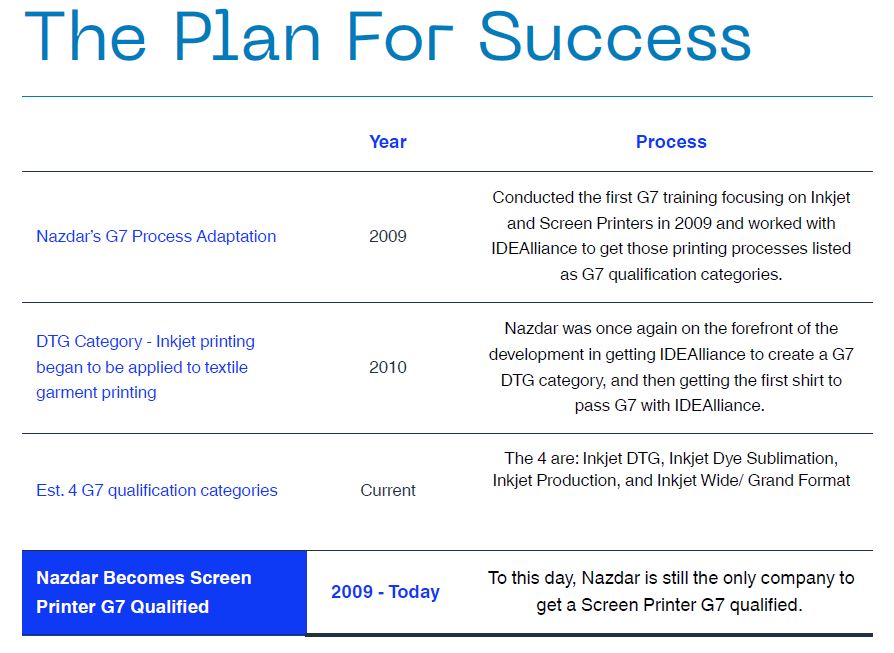
Direct to Garment Inkjet printing is an accepted G7 qualification segment. Committed to excellence, Nazdar conducted the first G7 training focusing on Inkjet and Screen Printers in 2009 and worked with “ The G7 color control methodology is the mostaccepted method to achieve predictable color by the largest brands worldwide.” IDEAlliance to get those printing processes listed as G7 qualification categories. To this day, Nazdar is still the only company to get a Screen Printer G7 qualified.
Once a printing process and substrate falls outside of the CRPCs, the G7 color control methodology is the most accepted method. The G7 color methodology achieves a measurable common appearance by balancing all CMYK images to neutral gray.
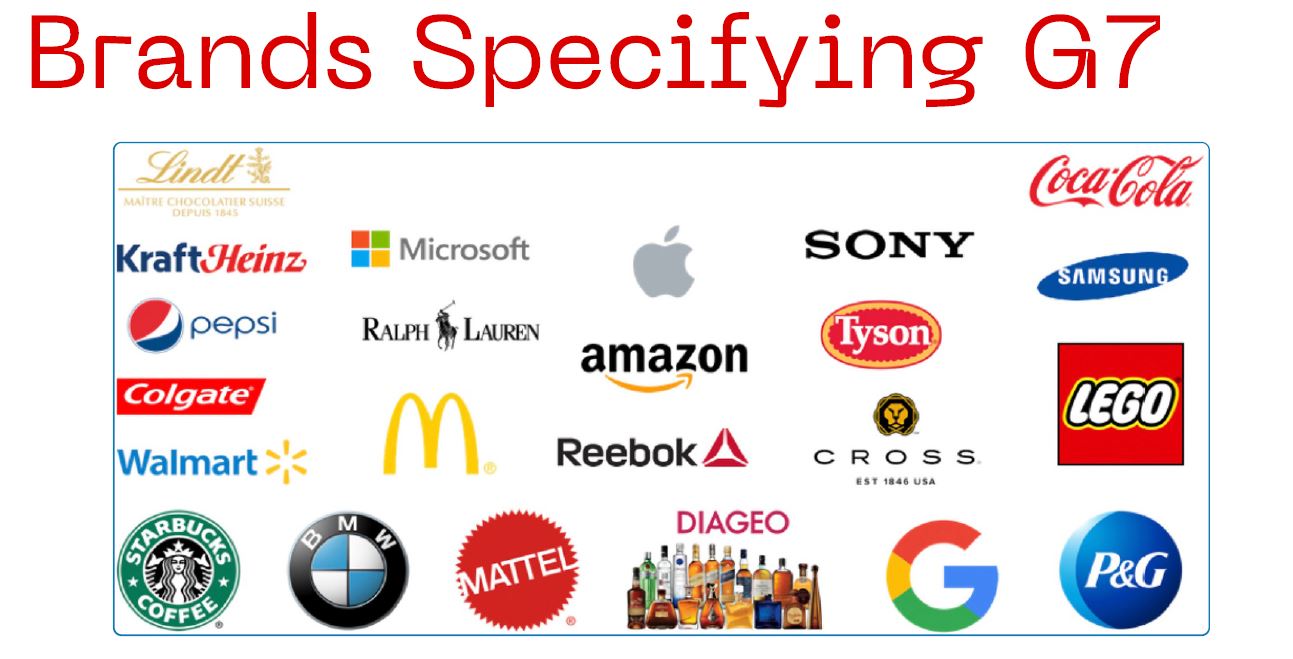
Fig 1 - A small sampling of brands specifying G7. Source: https://idealliance.org/amcor-limited-achieves-idealliance-g7-master-facility-qualification/
G7 is defined as the methodology used to achieve neutral gray balance with the 4 primary subtractive colors (CMYK) and their 3 overprint colors (RGB) to create Gray with those 7 colors, hence G7. The G7 methodology is the only color control process that can align all printing processes, devices, inks, and substrates to achieve a common measurable appearance without specifying the components required to achieve the result. G7 is an ANSI (American National Standards Institute) and CGATS (Committee for the Graphic Arts Technologies Standards) accepted methodology. G7 qualification can be awarded to a Professional located in a Master printing facility, and and Expert consultant who can train and qualify a Master printing facility and Professional in the G7 process at a Master printing facility.

G7 Color Control Is Applied to Screen and Inkjet Printing
It was back in 2008 when Nazdar’s Consulting Group first learned about the G7 Methodology when it was only being applied to Commercial Offset Printing applications outside of the CRPCs. Nazdar identified G7 as the ideal color control process for both Screen and Inkjet printing as neither of these processes were able to match exactly the CRPC recipes for Offset Printing on paper substrates.
Nazdar Leads in Process Requirements to Achieve G7 in DTG Printing
There are a lot of extreme variables unique to the DTG process that make it very challenging to achieve G7. The variation in the substrate / shirt was and is still the greatest challenge to achieve G7 in DTG printing. Here is a breakdown of some of unique considerations that are necessary to achieve a G7 qualified DTG shirt.

1. White Point
In DTG most prints are completed on colored garments, so the White point is most commonly a layer of White ink. To meet G7 qualification, it is only necessary to meet G7 requirements on one press / substrate / ink construction to qualify as a G7 Master Printer.
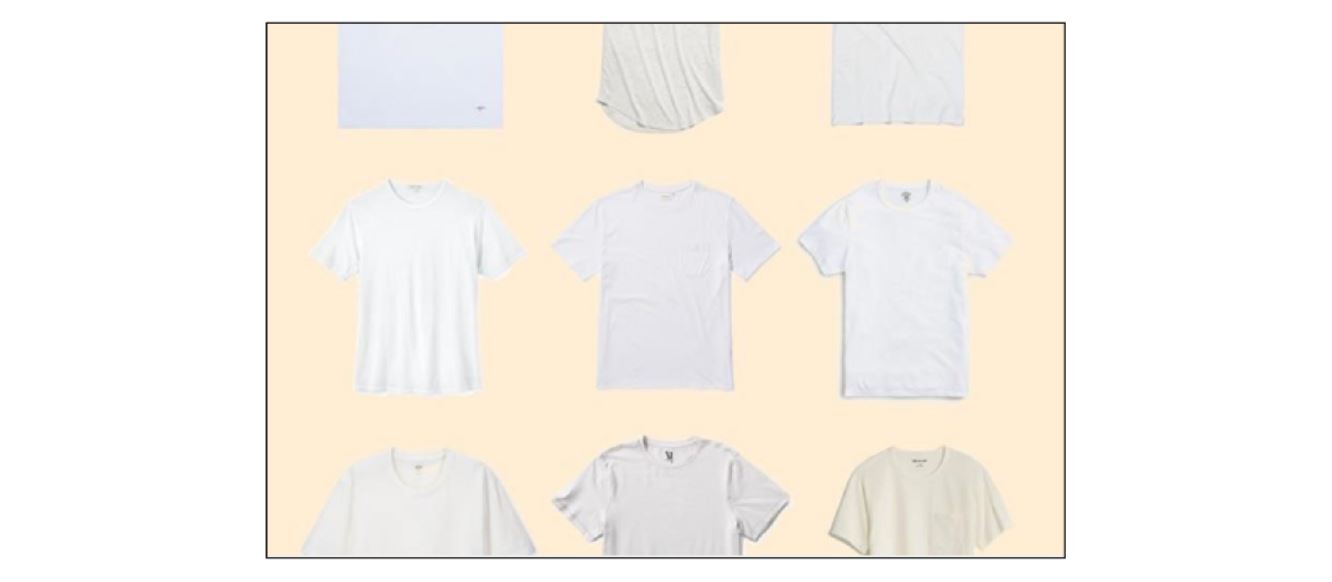
- Target White would be an L* of 92 or higher. If the White point of a White garment does not meet that requirement, then White ink can be printed down first to achieve the best white point.
- Determining Control Sample - It would be commonplace for a G7 printer to use a standardized or control substrate when doing their G7 qualification printing.
- Factoring in Variance - The white point of the control shirts should be measured as the white point may vary from box to box of shirts. Nazdar experts have the right equipment and knowledge to find the consistent brand and use it as the control default for G7 calibration work.
Fig 2 - Variance in white shirts
2. Pretreatment
To obtain a proper white ink layer and reduce ink penetration into the garment the pretreatment selection and processing is critical. The pretreatment must be about 90% - 100% dry prior to printing the white ink layer so that it allows the white ink to “gel” just enough for the colored inks to flow on it properly. The dryness and the solid content of the pretreatment will determine the setup of the white ink layer.
- Pretreatment Drying - must be about 90% - 100% dry prior to printing the white ink layer so that it allows the white ink to “gel” just enough for the colored inks to flow on it properly.
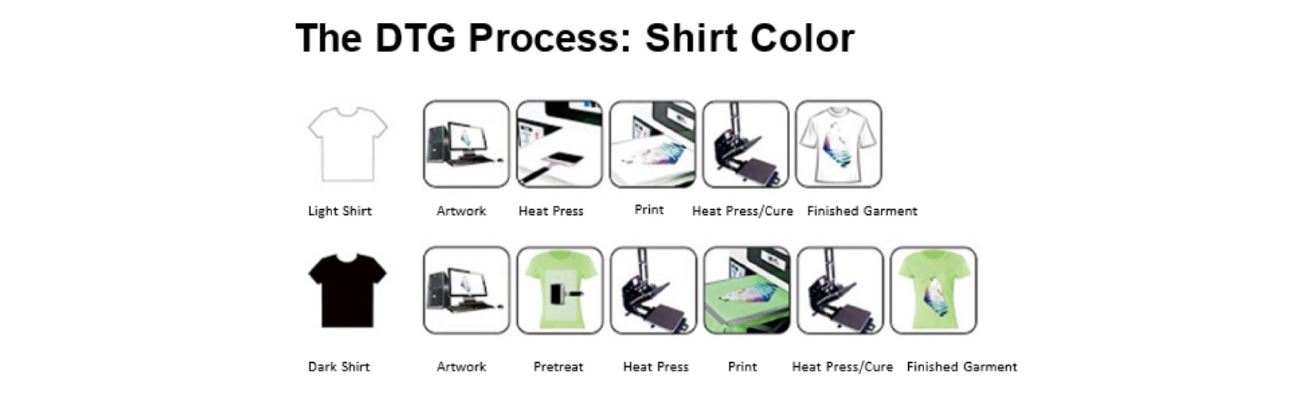
- Two Workflows - both which Nazdar has mastered for DTG printing. There is one for white shirts and one for colored shirts.
Fig 3 - Workflow steps for each type of shirt
3. Garment Selection
The garment should have a tight weave. Ring Spun garments are of higher quality for durability and have a better printing surface with less fibrillation than carded weaves.
- Percentages - Garment must have a larger percentage of cotton than synthetics.
- Expert Dye Migration - The higher the synthetic content, the more apt for dye migration from the garment into the white layer of ink.
4. Hydrophobic vs Hydrophilic
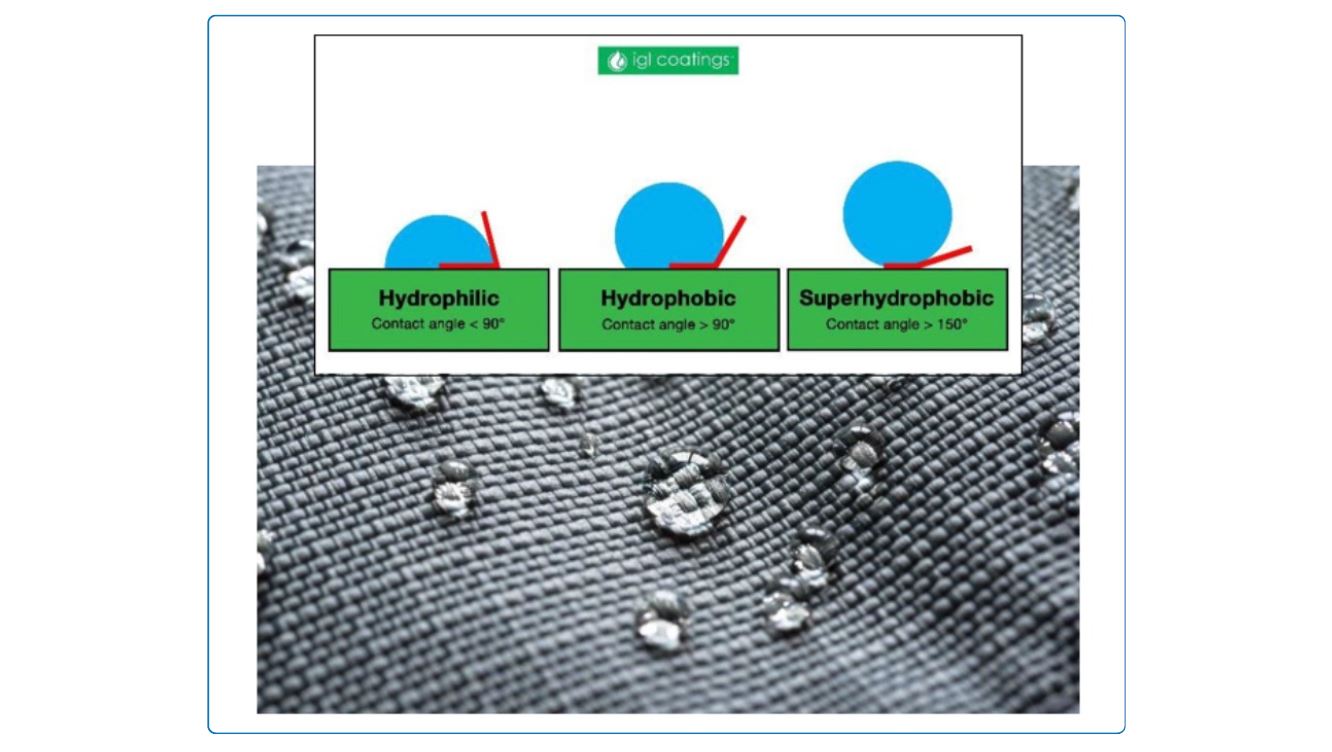
Garment must be Hydrophobic and not Hydrophilic, without crossing over into Super Hydrophobic. The print surface will need to accept some amount of water/liquid and not repel it. It also should not be hydrophilic so that the fabric absorbs the ink and produces “spreading” of ink by “dive in”. The illustration below indicates the narrow differences between these different surface conditions.
Fig 4 - Narrow differences between Hydrophobic vs Hydrophilic surface conditions
G7 Tolerances
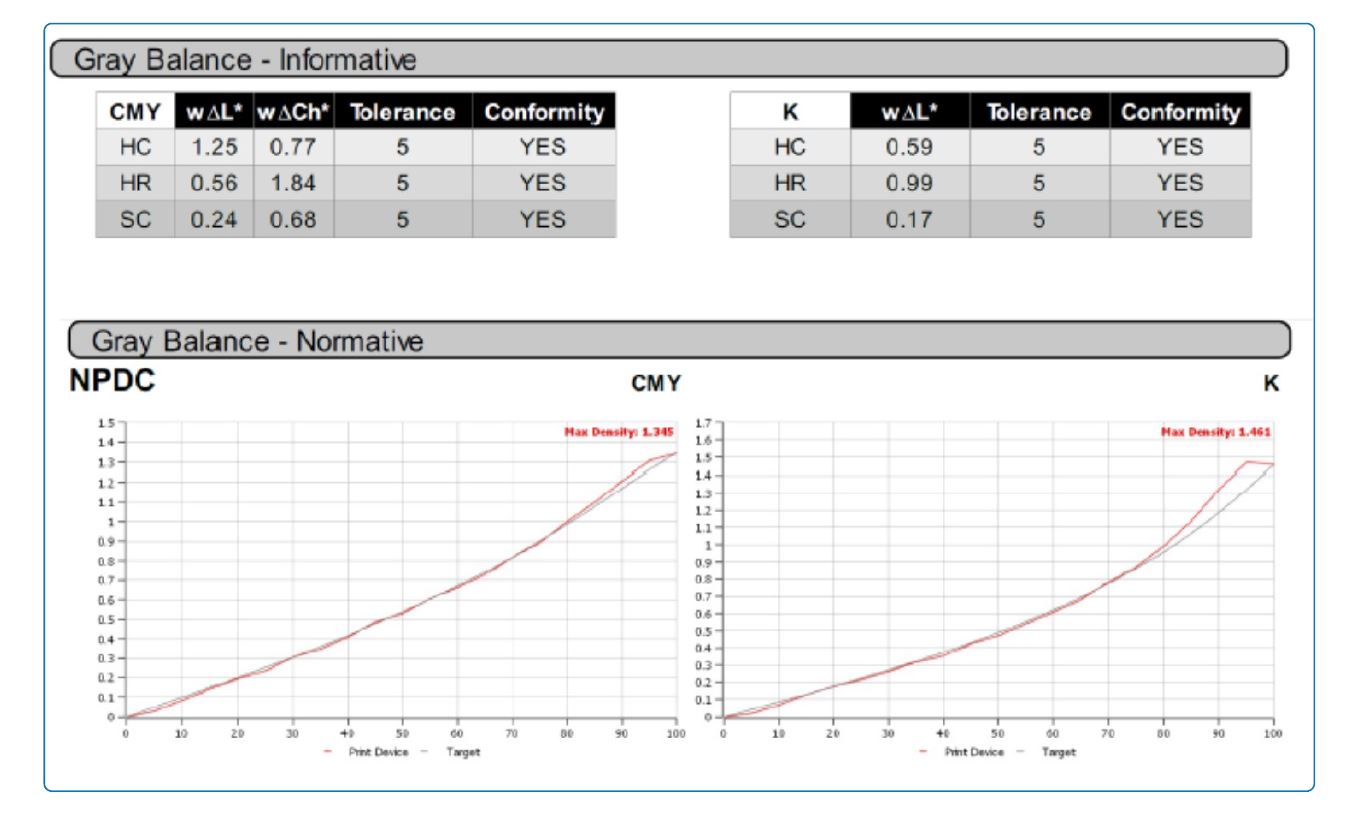
- Measurable Target Values for the Highlight Contrast (HC or 25%), Highlight Range (HR or 50%), and Shadow Contrast (SC or 75%) for both the CMY and K neutral print density curves. The color bars for these areas must measure within 2.5 – 5.0 dE to meet G7 conformity.
- Nazdar Expanded G7 Tolerances - Due to several extreme variables in DTG printing that are not common in the other Inkjet qualified categories, Nazdar worked with IDEAlliance to have the G7 tolerances for Inkjet DTG printing expanded to the same tolerances as G7 Screen printing tolerances. This expands the tolerances from 1.5 – 3.0 dE to 2.5 – 5.0.
Fig 5,6 - Passing conformance report for a white 100% cotton DTG shirt


DTG (direct to garment) Inkjet printing is an accepted G7 qualification segment. This will be meaningful to the established print market and brand owners who understand printing specifications and how they control color printing across all printing processes.
The established garment printing market has developed a separate proofing and printing method for full-color images that is unique to textile garment printing. Therefore they may not see the value in G7 color control and qualification. Those printers will still benefit from the documented control practices that have been outlined in this report to achieve predictable results.

We would love to hear from you!
@nazdarinks | [email protected] | +1 913-422-2255