L*a*b*: Putting Color into 3D Space
It's standard knowledge in graphics that RGB (Red, Green, Blue) uses the primary colors of light and is the color model for electronic devices, while CMYK (Cyan, Magenta, Yellow, Key [Black]) uses the primary colors of pigment and is for the world of printing. However, the downside of both these models is that neither is able to reproduce all of the colors that the human eye is able to perceive. This can cause issues as designers and printers must work within the confines of the available color reproduction devices.
L*a*b* color is a device-independent color model that is used for reference, as it approximates human vision containing the following variables: L* for Luminosity or Lightness (measured on a scale of 0 [Black] to 100 [White]), a* for Red (+/Positive) to Green (-/Negative), and b* for Yellow (+/Positive) to Blue (-/Negative). SGIA states that L*a*b* is the most widely used and recognized color matching system for describing colors with numbers. It is often compared to a GPS, as all colors are described in terms of coordinates.


Since no color can be both Blue and Yellow, or Red and Green, LAB color places these colors as opposites.
Various programs utilize L*a*b* to help illustrate the varying restrictions of different color modes. RGB is the outer gamut depicted below, showing its larger color range. GRACoL (General Requirements for Applications in Commercial offset Lithography) is a widely accepted color reproduction specification in relation to printable colors. As seen below, GRACoL has a much smaller maximum color range, indicating that we would not be able to reproduce all the colors visible on a screen onto a print.

The outer shape depicts the maximum colors available in RGB mode—a larger gamut than is available to print, indicated by the GRACoL gamut within. The distinction is critical when moving from digital design to production.
This digital representation can be taken another step further by putting the color gamuts into 3D space, as seen below. By inputting each color space, we are able to see the large chunks of gamuts that are available in RGB, but not reproducible in GRACoL.

The GRACoL gamut is sliced from the bottom (L=0, or black) to the top (L=100, or white), showing the different colors available within the gamut as Luminosity is increased.
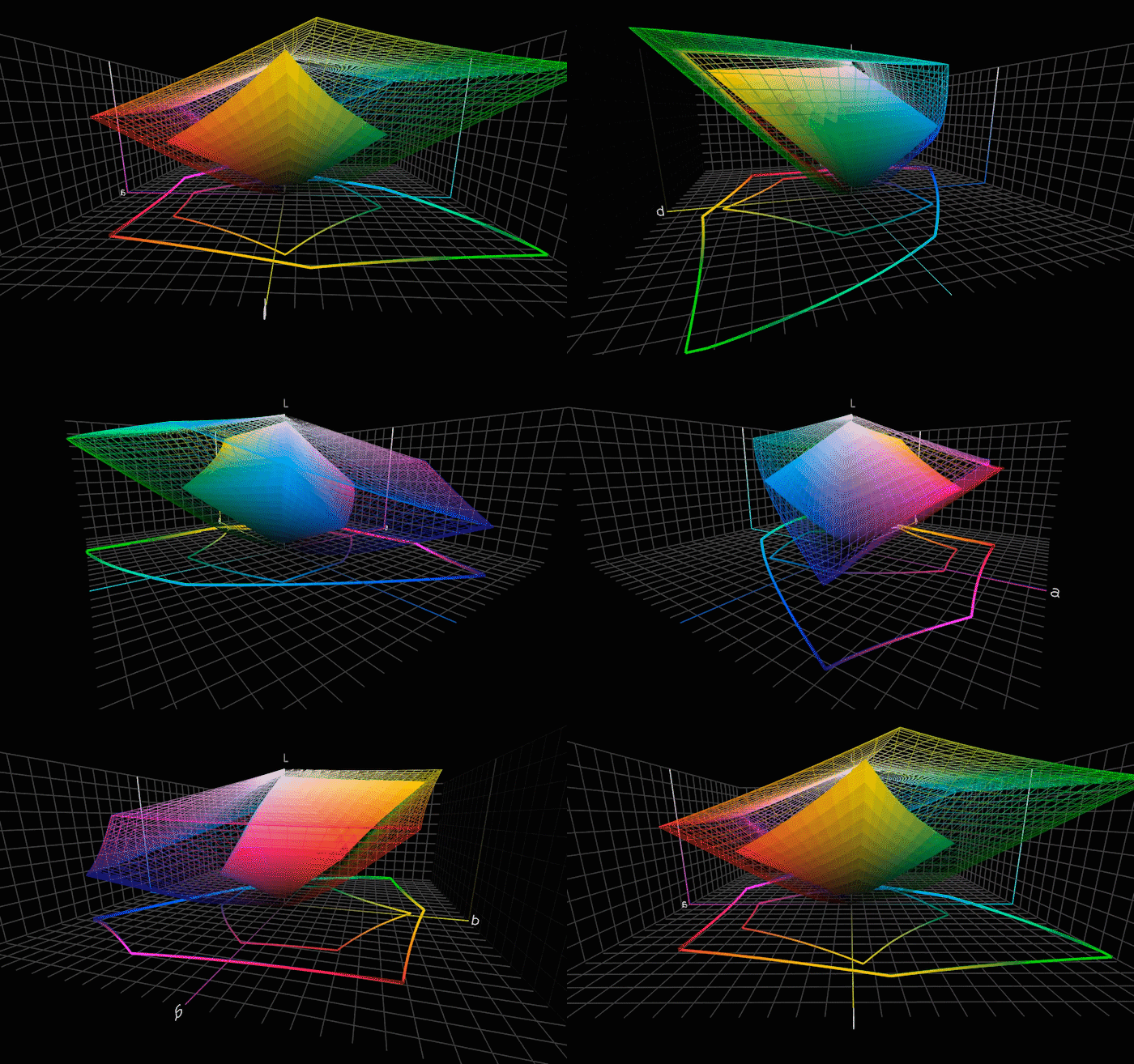
The outer wireframe represents the 3-dimensional shape of the RGB gamut, while the inner shape shows the GRACoL range. This 3D representation illustrates the restrictions of the print gamut, particularly in areas of bright green.